I recently found myself thinking about two of my favorite puzzle games: Vetka and NetWalk. In one, you piece together a tree; in the other, you restore a computer network. They look different and generate their boards a little differently, but the basic idea is the same: rotate tiles until the scattered pieces form a working network.
I wanted to see how far I could take that simple rule. What if there were several sources instead of just one? What if two networks could cross without connecting? What if two branches could come together to produce an entirely new color? Those questions grew into Conduit, my logic puzzle game for Android (Google Play).
The familiar setup: rotate tiles and connect the network
The basic mode works like Vetka: there’s a root, a set of leaves, and branches in between. Rotate the tiles until every leaf is connected to the root. Swap the branches for cables and the leaves for computers, and you have the familiar challenge from NetWalk.
I wanted to keep that moment when you’ve been staring at the board for a while, turn one tile, and suddenly see how a whole section fits together. The new mechanics change which connections you’re looking for, but making them is still as simple as turning a tile.
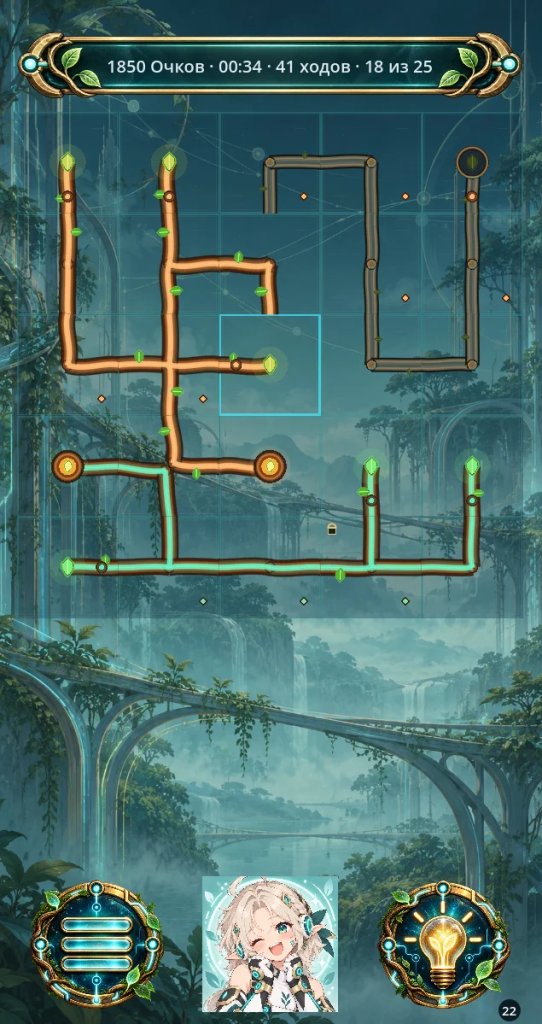
Multicolor: several roots on one board
Multicolor was the first addition. Instead of a single root, the board has several sources of different colors. A branch can connect to any of them, so you’re deciding not only which way to turn it, but also which tree it should belong to.
I added two kinds of tiles for this mode: bends and crossings. A crossing lets two branches pass through the same square without joining, so routes can cross while remaining part of separate trees.
Nodes: one leaf shared by two trees
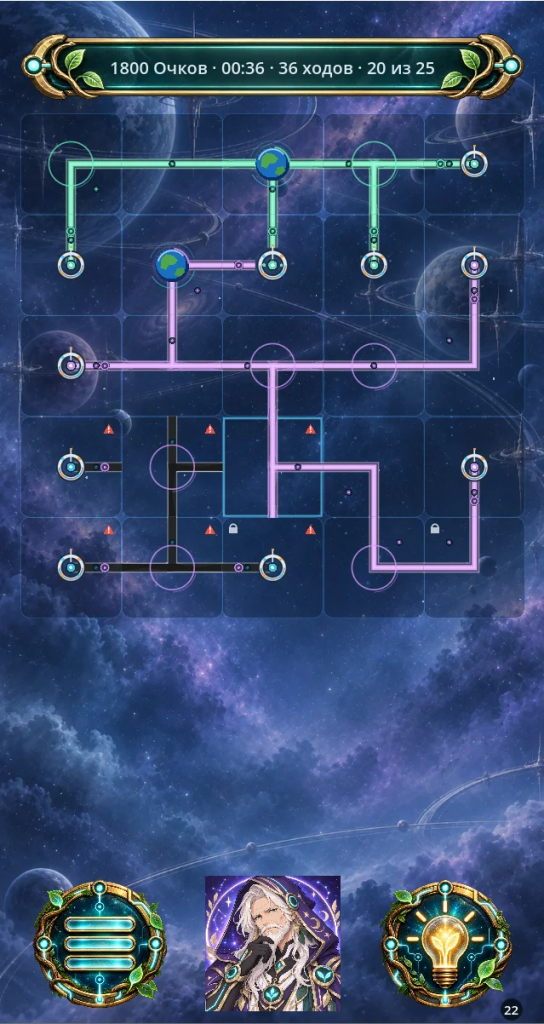
Nodes flip that idea around. At a crossing, branches pass each other without connecting. A node is where they’re supposed to meet. The easiest way to picture it is as a leaf that needs a branch from each of two different trees.
That means you can’t always solve one tree at a time. A route that works for one tree also has to leave room for the other.
Mixers: a new color at the output
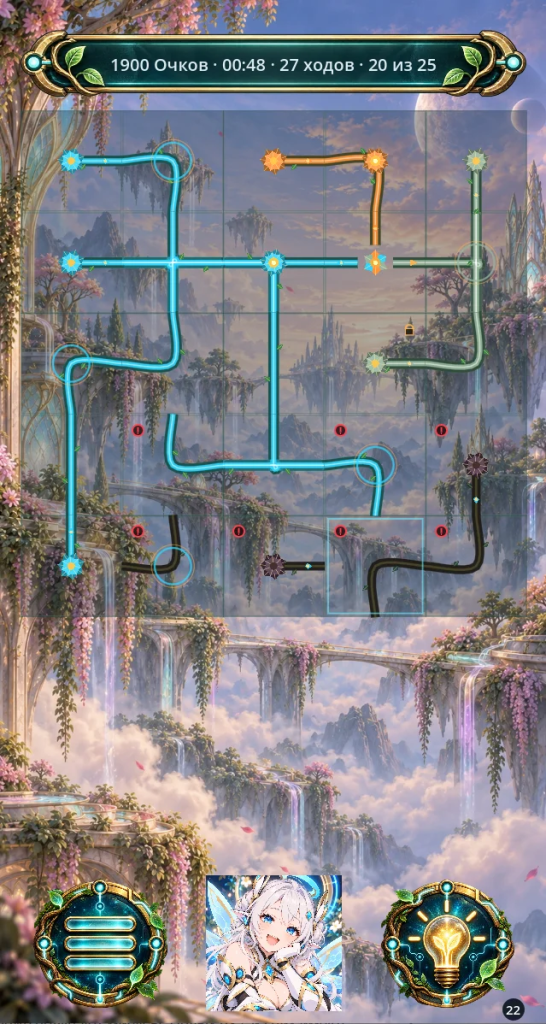
A mixer has several inputs and one output. Connect colored branches to its inputs, and it combines those colors into a new one.
Now it’s not enough to get a branch to the right tile. You also have to figure out which colors to feed into the mixer so that the color you need comes out the other side.
Endless Path: all the mechanics on one board
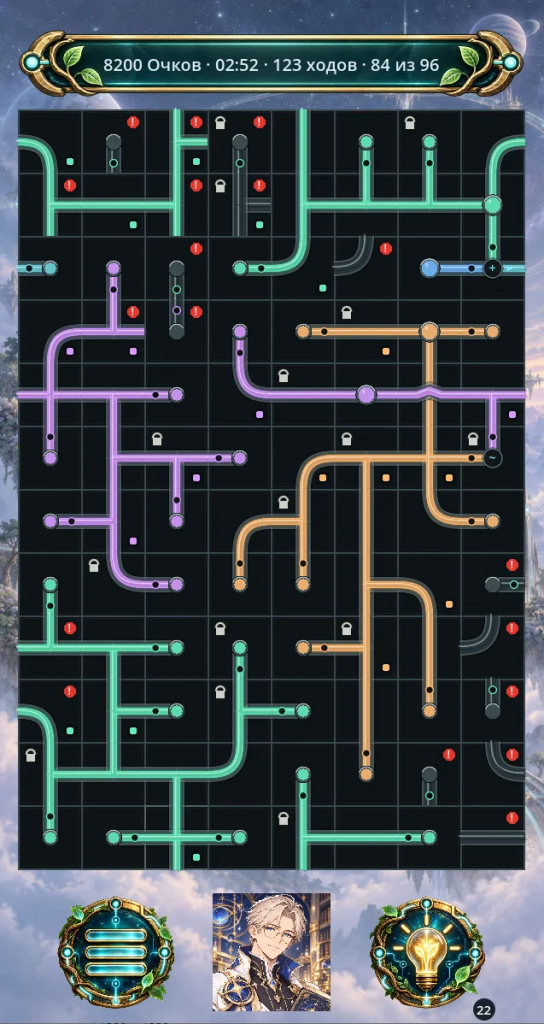
You can try each mechanic on its own, then bring them together in Endless Path. Here, multicolored roots, nodes, and mixers can all appear on the same board. It pays to look at the whole puzzle: a route that seems perfect in one corner might block the only way to connect another section.
Every level in Conduit is procedurally generated, so starting a new game means solving a fresh puzzle rather than repeating a solution you already know. I’m still tuning the generator, especially for the later levels. I want them to get harder because the connections are more interesting, not just because there are more tiles on the board.
Conduit is available on Google Play and RuStore. If you give it a try, I’d love to hear which mechanic you enjoyed most and where you noticed the difficulty pick up. That kind of feedback helps me tune the generator.

